
Consumer psychology in the agentic era: What happens when AI decides?


For decades, digital commerce has been designed around how humans make decisions. The agentic web introduces a new question: what happens when humans increasingly decide how decisions should be made, then let machines make them?
We've spent decades learning how people shop online. Now we're teaching machines to shop for them.
The journey is starting to look less like browse, compare, buy and more like define, delegate, evaluate, approve. That shift changes where psychology operates in the buying journey.
But it doesn't make it irrelevant.
In this article, we take a look at how consumer psychology appears to be shifting as AI agents start handling research, comparison, and increasingly, the purchase itself. We cover what shoppers are and aren't ready to delegate, and why trust becomes the new conversion challenge. Plus, what this all means for brands that now must appeal to both people and the agents acting on their behalf.
Table of contents
Most of what we recognize in online shopping is a response to human psychology: curated choice, social proof from reviews, scarcity and urgency cues, frictionless checkout, personalized recommendations, and trust signals.
Each exists because people are busy, uncertain, influenced by others, and sometimes afraid of missing out.
Sheena Iyengar and Mark Lepper's well-known jam study is one of the clearest illustrations of this. Across three experiments, limiting the choice to six options made people more likely to act than offering 24 or 30. Those who chose from the smaller selection were also more satisfied with their decision.
The lesson retailers took from it wasn't to offer less. It was to help people choose, which is why so much ecommerce design exists in the first place.
The table below breaks down familiar tactics and the psychology behind them, and then what starts to change as AI agents sit between the brand and the shopper:
| Ecommerce tactic | Human psychology | AI agent |
|---|---|---|
| Reviews and ratings | Social proof | Data the agent weighs and summarizes, not a feeling the shopper has in the moment |
| "Only 3 left!" | Scarcity and urgency | Availability information, not an emotional trigger |
| Filters and sorting | Reducing the effort to choose | Agent does the filtering, based on constraints |
| Personalized recommendations | Relevance and less searching | Driven by what the shopper told the agent, not browsing behavior |
| One-click checkout | Reducing friction at the commitment moment | Completes the purchase if authorized |
It's tempting to read agentic commerce as the human being removed from the loop. But the evidence so far points to delegation, not replacement.
McKinsey's analysis describes a world in which “the customer is still human, but AI agents increasingly mediate key decisions”, and estimates that, even under moderate scenarios, agents could mediate $3 trillion to $5 trillion of global consumer commerce by 2030.
Consumer behavior today looks more like assistance than autonomy. Bain reports that around 30% of US consumers use generative AI for product comparison and recommendations. While Ipsos, drawing on 15 markets, found that 27% of AI-aware consumers already use AI for product research and another 43% are open to it, yet only 9% currently allow AI to make autonomous purchases. Ipsos continues by describing AI as an “enhancement layer” while shoppers retain the ultimate decision-making authority.
Consumers are happy to delegate the effort. They're much slower to delegate the decision.
Choice overload is the idea that too many options can make deciding harder rather than easier, though the effect isn't universal.
A meta-analysis pooling 99 prior studies and more than 7,200 participants found choice overload depends on four conditions:
- How complex the choice set is
- How difficult the decision feels
- How uncertain shoppers are about their own preferences
- Whether their goal is to minimize effort
The harder the decision and the fuzzier the preference, the more likely overload becomes.
Agents act directly on those conditions. Picture a fan who tells an agent: find two seats together for Saturday's show, under $150 each. Instead of scrolling through dozens of seating charts and resale listings, the fan states the constraints once and lets the agent produce a shortlist. The cognitive work moves from the fan to the agent.
But the agent's recommendation then becomes the new decision point. The question shifts from “Which seats should I choose?” to “Do I trust the agent's shortlist?” Choice overload gives way to dependence on recommendations, which makes trust part of the buying experience itself.
Much of ecommerce persuades people after they've arrived. Agentic commerce may reduce those opportunities.
McKinsey notes that agents are reshaping “how intent forms, how products are discovered”, and that intent is shifting upstream. Bain finds that third-party agents are disrupting the top of the funnel. BCG puts it bluntly: in agentic commerce, a retailer can make a sale and never receive a human visit on their site.
Here's another illustrative case. A shopper tells an agent: order my groceries, stay under $100, skip the snacks. A well-merchandised checkout promotion now has little to work with, because the preference was set before the shopper arrived.
The shift is from persuading someone in the moment to being the right answer to a preference they've already stated.
When a shopper delegates, three kinds of trust come into play:
- Does the agent understand me?
- Is its recommendation right?
- Will it act within the limits I set?
Academic research by Fan and Liu suggests that giving AI more control isn’t always better. Across three studies, consumers responded positively to some autonomy, but that effect declined as the algorithm took on more of the decision. Put simply, a little autonomy can help; too much can backfire.
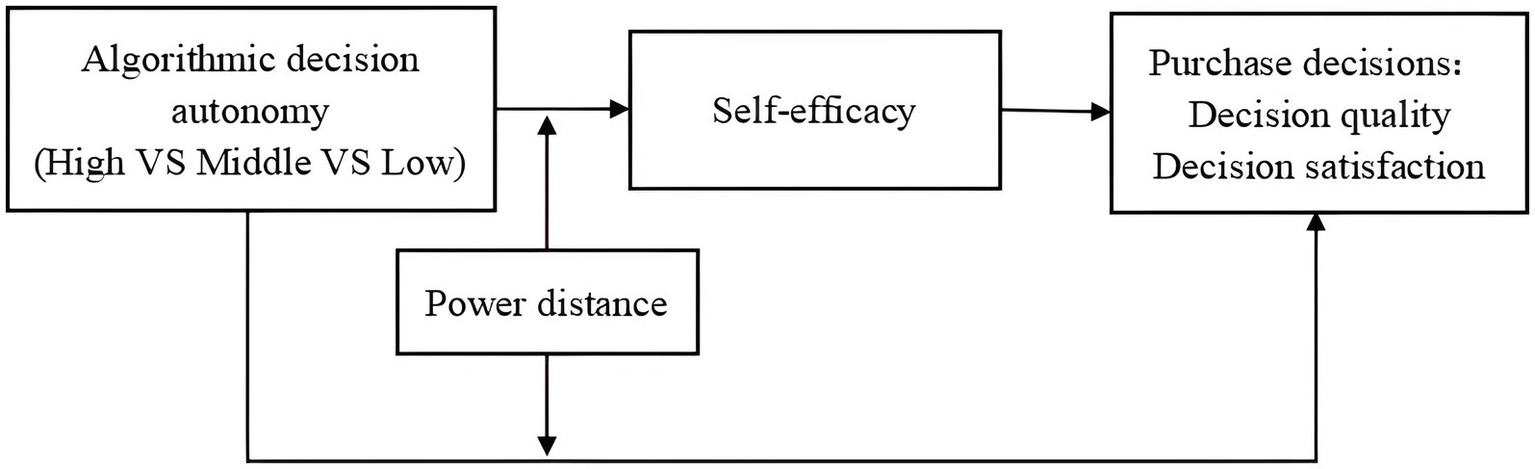
Theoretical framework from Fan and Liu, 2022
We can already see that tension in attitudes towards AI shopping. Bain finds that consumers currently trust retail-owned agents three times more than third-party agents to complete transactions, while around half of consumers were not comfortable letting AI handle transactions from start to finish. Ipsos similarly found that adoption varies considerably with consumer trust.
So, the question isn’t simply whether shoppers trust AI. It’s what they trust it to do.
A shopper might happily let an agent compare hundreds of products or build a shortlist but still want to approve the final purchase. For repeat or low-stakes purchases, they may be comfortable handing over much more.
That means the winning agentic experiences may not be the ones that automate everything. They may be the ones that give shoppers the right level of control at the right moment, removing the effort of shopping without removing their sense of agency.
So, back to our fan: how much of the ticket search, the comparison, and the final purchase are they comfortable leaving to the agent?
Just because AI agents can make decisions for us doesn’t mean we’ll hand over every decision in the same way.
The level of control shoppers are willing to delegate will likely depend on what they’re buying and how much the decision matters to them. Reordering toilet paper is very different from choosing a new laptop, booking a holiday, or buying tickets to see a favorite artist. The higher the cost, risk, or personal importance of the decision, the more likely shoppers may want to stay involved.
We already see a version of this in how people shop online. Some purchases are easy to make quickly on the phone. Others become “laptop purchases”, or decisions important enough that we want more information, more comparison, and a greater sense of control.
AI agents could add a new dimension to that behavior. For routine purchases, shoppers may be comfortable letting an agent handle almost everything. For more considered purchases, the agent might research products, compare options, and make recommendations while leaving the final decision to the shopper.
This means agentic commerce is unlikely to be a simple shift from human decision-making to automated decision-making.
Instead, we could see a spectrum of delegation, with consumers deciding how much authority to hand over depending on the purchase.
And that makes the consumer’s role more important, not less. The agent may do more of the work, but the shopper still sets the boundaries.
RELATED: How AI agents are changing the way fans find and buy tickets
Scarcity has long influenced how people shop. A product running low, a limited-time offer, or tickets selling quickly can create urgency and push shoppers towards a decision.
But an AI agent doesn’t experience FOMO. It doesn’t get excited when only three tickets are left or feel pressure when a timer starts counting down.
The shopper behind the agent still does.
In an agentic buying journey, that could shift when scarcity influences the decision. Instead of reacting in the moment, shoppers may need to decide in advance how they want their agents to respond. Would you let an agent buy a concert ticket automatically if availability fell below a certain level? Would you allow it to exceed your preferred price if the alternative was missing out altogether?
This means FOMO may not disappear in agentic commerce, but it could move upstream. Consumers may increasingly set their preferences and boundaries before scarcity occurs, leaving the agent to act on those instructions when it does.
For brands, that could change the role scarcity plays in the customer journey. The question becomes less about how an agent reacts to urgency and more about how the consumer anticipated that urgency when deciding what authority to delegate.
Brands still need to earn human preference. Increasingly, they also need to be legible and selectable to the agents acting on shoppers’ behalf.
BCG frames this as two jobs for retailers: remain a destination that shoppers choose directly, while also winning the evaluation stage when agents choose for them. Bain's brief makes a similar point, arguing that industry leaders need to start competing “for shoppers and agents alike.”
For humans, the job is to give them a reason to want you. For the agent, it’s to give it a reason to select you.
But serving two audiences introduces another challenge: brands need to recognise which audience they’re dealing with and decide how each should be treated.
Competing for agents doesn’t necessarily mean giving them unrestricted access. As agents take on more of the shopping journey, brands and platforms will need to decide where and how they can participate. Which agents should be allowed to act on a shopper’s behalf? What should they be able to access or purchase? And should an agent competing for a limited product, ticket, or service follow the same rules as a human shopper?
These questions become particularly important when agents can operate at a scale or speed humans can’t match. The challenge isn’t simply knowing whether traffic is human or automated. It’s deciding what different types of traffic should be allowed to do and applying those rules consistently.
This is where online traffic orchestration comes in. Instead of treating all automated traffic the same way, the goal is to understand the traffic reaching a site and apply the appropriate rules. That gives brands greater control over how humans, bots, and AI agents interact with their digital channels.
That doesn’t necessarily mean treating humans and agents identically. It means deciding how you want to treat each and applying those rules consistently, so legitimate agents can act on behalf of shoppers without compromising fair access for everyone else.
A few practical starting points for brands:
- Make availability, pricing, and eligibility accurate and machine-readable. Agents can only act on what they can interpret correctly.
- Design approval moments. Let shoppers set limits upfront and decide when the agent should check in before acting.
- Define how agents should interact with your digital channels. Decide which agentic activity you want to allow and what rules should apply.
- Keep building human preference. Brand loyalty may increasingly be stated upfront as an instruction to an agent, rather than won at the point of sale.
Agents can take on the searching, the comparing, and the choice overload. What they can't take on is the part that was never really about effort in the first place: deciding what the shopper actually wants, how much authority they're willing to hand over, and which brands and agents have earned enough trust to act on someone's behalf.
That's the real shift. Consumer psychology doesn't disappear in the agentic era. It moves upstream, into the intent someone states before they've even opened an app, the boundaries they set around what an agent can decide alone, and the moments they still want to be asked. Our ticket-buying fan from earlier didn't stop caring about getting good seats at a fair price just because an agent was doing the legwork. They just started expressing that care earlier, and in a different form.
For brands, that's the opportunity. The winning agentic experiences won't be the ones that automate the most. They'll be the ones that remove friction from the parts people never wanted to do, while leaving them clearly in control of the parts that still matter to them.